


- 越南翻译,越南商务,考察市场及旅游 20/08/2019, 16:40
- Vi vu Quảng Châu, Shopping Quảng Châu 11/10/2019, 00:14
- Vi vu Thượng Hải, Vô Tích 25/10/2019, 14:57
- Vi vu Bắc Kinh, phiên dịch kiêm hướng dẫn viên tại Bắc Kinh 06/11/2019, 18:00
- Phiên dịch, thông dịch ở Bắc Kinh, du lịch Bắc Kinh 01/12/2019, 14:42
- Phiên dịch, thông dịch ở Quảng Châu, đánh hàng Quảng Châu 03/12/2019, 16:05
- Phiên dịch ở Vân Nam Trung Quốc 08/12/2019, 12:53
- Phiên dịch tại Nghĩa Ô, Chiết Giang 14/12/2019, 11:52
- 越南翻译带你了解越南的榴莲 26/12/2019, 15:10
- Phiên dịch viên và những tai nạn nghề nghiệp 20/06/2020, 16:35
Hiring A Chinese-English-Vietnamese Interpreter in Shanghai 2027
Introduction
As we look toward 2027, the economic landscape of Asia is undergoing a profound transformation. The supply chain shifts known colloquially as "China Plus One" have not diminished China’s role as the world’s factory; rather, they have elevated Vietnam to a critical status as a complementary manufacturing hub. Shanghai, serving as the financial and logistical brain of this network, is now the epicenter of a tri-lateral trade relationship between China, Vietnam, and the West.
For multinational corporations, logistics firms, and manufacturing giants, the need to bridge the linguistic gap between Mandarin, English, and Vietnamese has never been more acute. Whether you are negotiating a factory lease in the Shanghai Free Trade Zone or managing cross-border e-commerce logistics, the success of your operation hinges on one crucial factor: communication.
This article serves as an expert guide on Chinese-English-Vietnamese interpretation in Shanghai. If you are looking to navigate the complexities of this niche linguistic market, hire an interpreter in Shanghai, or understand how to find an interpreter in Shanghai who meets the rigorous demands of 2027, this comprehensive resource will provide the answers you need.
The Tri-Lingual Business Hub: Why Shanghai?
Shanghai is not just a Chinese city; it is a global node. By 2027, the integration between Chinese capital and Vietnamese labor, mediated by English as the global lingua franca, will be tighter than ever. A Shanghai interpretation company is no longer just a service provider; it is a strategic partner in risk management.
When a Vietnamese delegation arrives in Shanghai to inspect machinery, or when a Chinese tech firm travels to Ho Chi Minh City (though often coordinated from their Shanghai headquarters), the intermediary language is rarely direct. Often, it flows from Vietnamese to English, and English to Chinese. However, the nuance of business negotiation requires a direct, cultural bridge—a Chinese-English-Vietnamese interpreter in Shanghai.
The Complexity of the Tri-Lingual Role
The demand for Chinese-English-Vietnamese interpretation in Shanghai is unique because it involves three distinct linguistic families.
1.Mandarin (Sino-Tibetan): Highly contextual, tonal, and full of business idioms.
2. English (Indo-European): The standard for international contracts and legal documentation.
3.Vietnamese (Austroasiatic): A tonal language heavily influenced by Chinese vocabulary (Sino-Vietnamese words) but with a distinct grammar and cultural politeness structure.
An interpreter facilitating this trio must possess "code-switching" abilities that are mentally exhausting and technically demanding. They must understand that "face" (mianzi in Chinese, thể diện in Vietnamese) is a critical concept in both Asian cultures, and they must translate through the lens of English without losing the cultural imperative of the original speaker.
If you search for a Chinese-English-Vietnamese interpreter in Shanghai, you are not just looking for someone who speaks three languages; you are looking for a professional who understands the geopolitical and economic nuances of Sino-Vietnamese relations.
The 2027 Landscape: What Has Changed?
The interpretation market in Shanghai has evolved significantly. By 2027, the demand for this specific language combination has been driven by three key sectors:
1. Advanced Manufacturing and Automation
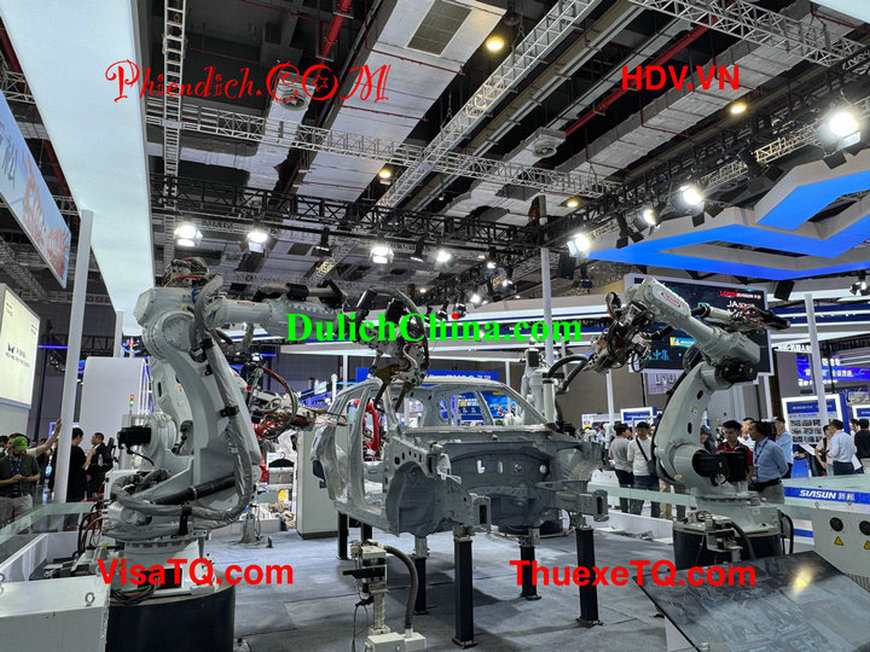
As China moves up the value chain, it exports high-tech machinery to Vietnam. Shanghai serves as the technical support hub. When Vietnamese engineers come to Shanghai for training, or when Chinese engineers need to explain complex operational manuals to a Vietnamese workforce, a Chinese-English-Vietnamese interpreter in Shanghai is required to ensure safety and efficiency.
2. Cross-Border E-Commerce and Logistics
Shanghai’s port is the busiest in the world. The flow of goods between China and Vietnam relies on precise documentation and real-time coordination. Misinterpretation of customs regulations or logistics schedules can result in millions of dollars in delays. A Shanghai interpretation company often provides interpreters for these high-stakes supply chain meetings.
3. Financial Technology (FinTech) and Green Energy
Shanghai is a hub for green tech and finance. Vietnamese startups and Chinese investors frequently meet in Shanghai. These meetings require interpreters who understand technical terminology related to solar energy, wind power, and digital banking.
How to Hire an Interpreter in Shanghai: A Step-by-Step Guide
Finding a qualified interpreter is a process of elimination. The market is flooded with amateurs claiming to be bilingual, but a professional interpreter for a business conference is a different caliber. Here is how to hire an interpreter in Shanghai successfully.
Step 1: Define Your Mode of Interpretation
Before you contact a Shanghai interpretation company, you must know what you need:
· Simultaneous Interpretation: Used for large conferences. The interpreter speaks at the same time as the speaker, requiring a soundproof booth and specialized equipment.
· Consecutive Interpretation: The interpreter speaks after the speaker pauses. This is common in smaller meetings, site visits, and negotiations.
· Liaison Interpretation: "Whispering" or informal interpretation for smaller groups or factory tours.
Step 2: Verify the Language Pair
Be explicit. You need a Chinese-English-Vietnamese interpreter in Shanghai. You do not want an English-Vietnamese interpreter trying to "guess" the Chinese, nor a Chinese-English interpreter using translation software for the Vietnamese part. The tri-lingual brain is a specialized organ.
Step 3: Check for Subject Matter Expertise
A general interpreter might work for a dinner reception, but for technical discussions, check their background. Do they know the difference between "injection molding" and "extrusion"? Do they understand the basics of import duties? When you find an interpreter in Shanghai, ask for their CV and look for industry experience.
Step 4: Book Early
By 2027, the demand for rare language combinations will be high. The best interpreters are booked weeks, sometimes months, in advance. If you have a trade show or a critical Q4 budget meeting, secure your Chinese-English-Vietnamese interpretation in Shanghai services as early as possible.
The Role of a Professional Shanghai Interpretation Company
Why use an agency instead of a freelancer? A reputable Shanghai interpretation company offers several advantages, especially when dealing with rare language combinations.
1. Quality Assurance and Backups
If a freelancer falls ill the night before your event, you are stuck. An agency has a roster of interpreters. They can guarantee a replacement. They also vet the interpreters, checking their credentials and experience levels.
2. Confidentiality and NDAs
Business negotiations often involve sensitive IP. An established agency will ensure that the Chinese-English-Vietnamese interpreter in Shanghai they provide has signed Non-Disclosure Agreements (NDAs) protecting your intellectual property.
3. On-Site Support
Interpretation is not just about words; it is about logistics. An agency will handle the delivery of equipment, project management, and coordination with your event organizers.
4. Cultural Mediation
A good agency provides interpreters who act as cultural bridges. They can advise you on whether a particular direct English phrase might offend a Vietnamese counterpart or a Chinese official, and suggest a more culturally appropriate way to phrase it.
Finding the Right Fit: Freelancer vs. Agency
The debate between hiring a freelancer directly and using a Shanghai interpretation company is ongoing. Here is a breakdown to help you decide.
When to Hire a Freelancer
If you already have a trusted contact and a budget that requires cutting out the middleman, a freelancer is a viable option. However, finding them is difficult. You have to network at chambers of commerce or rely on word-of-mouth referrals. To find an interpreter in Shanghai who speaks Vietnamese specifically, you often need to tap into the ASEAN expat community or university alumni networks.
When to Use an Agency
If you are coming to Shanghai for the first time or organizing a critical business event, use an agency. The cost might be slightly higher, but the peace of mind is worth it. They eliminate the risk of hiring someone who exaggerates their abilities on a resume. When you need to hire an interpreter in Shanghai for a complex, multi-day negotiation, the agency handles the logistics and the vetting.
The Cost of Tri-Lingual Interpretation in 2027
Pricing is a sensitive subject, but transparency is key for budgeting. The rates for Chinese-English-Vietnamese interpretation in Shanghai vary based on several factors:
1.Experience Level: Junior interpreters (recent graduates) vs. senior interpreters (10+ years with industry expertise).
2. Duration: Half-day vs. full-day. Usually, a full day is defined as 8 hours. Overtime rates apply.
3. Location: Interpretation inside the city center (Puxi) is standard. If the event is in Pudong, or requires travel to a factory in the outer suburbs (like Jiading or Songjiang), transportation fees will be added.
4. Mode: Simultaneous interpretation is more expensive than consecutive because it requires two interpreters to rotate (due to mental fatigue) and specialized equipment.
The "Rarity Premium": Because the Chinese-English-Vietnamese combination is rarer than Chinese-English, expect the rates to be higher than the standard market rate. You are paying for a specialized skill set that is in high demand.
Why the Vietnamese Market Matters for Shanghai
To understand why the demand for these interpreters is skyrocketing, one must look at the macroeconomic data. China remains Vietnam's largest trading partner, and Vietnam is China's largest trading partner in ASEAN.
Shanghai is the headquarters for many Chinese companies expanding into Southeast Asia. These companies need to send Chinese managers to Vietnam, and bring Vietnamese managers to China for training. The communication flow is bidirectional and constant. The modern interpreter in Shanghai is not just a translator of words, but a translator of business strategies.
For companies in the US or Europe looking to sell to Vietnam, Shanghai is often the financial intermediary. Using a Chinese-English-Vietnamese interpreter in Shanghai allows you to communicate seamlessly with all stakeholders in the room—the Chinese investor, the Vietnamese manufacturer, and your Western management team—without the need to hire three separate linguists.
Navigating Cultural Nuances: The "Face" Factor
If you search for "Chinese-English-Vietnamese interpretation in Shanghai" or "Shanghai interpretation company," you are likely planning a negotiation. Success in Asia is often 20% technical skill and 80% cultural awareness.
A professional interpreter understands the hierarchy implicit in both Chinese and Vietnamese culture. They know how to soften a demand or how to translate a "no" politely. For example, a Chinese negotiator might say "Let's study it further," which actually means "No." An inexperienced interpreter might translate this as "We will consider it," giving the Vietnamese side false hope. A professional interpreter understands the subtext and can use English to convey the true intent or advise you privately.
When you hire an interpreter in Shanghai, you are essentially hiring a cultural consultant. This is critical when dealing with Vietnamese investors, who are known for their indirect communication style, similar to the Chinese, but distinct in their intent.
FAQ: Answering Searcher Intents
Below are the answers to the most common questions people ask when searching for these services.
Q: How far in advance should I book a Chinese-English-Vietnamese interpreter in Shanghai?
A: For basic consecutive meetings, two weeks is standard. For large conferences or simultaneous interpretation (where equipment is needed), at least one month is advised. By 2027, with the rise of AI and in-person events, top-tier interpreters are booked out 2-3 months in advance for busy seasons (March-April, September-November).
Q: Can I use AI translation instead of hiring a Shanghai interpretation company?
A: AI is excellent for reading documents and basic communication. However, for high-stakes negotiations, legal proceedings, or technical site visits, AI lacks the emotional intelligence and contextual understanding required. AI cannot read the room, gauge the mood, or save a deal when a mistranslation occurs. Human interpretation is insurance for your business relationships.
Q: Do I need to provide a microphone for the interpreter?
A: If you hire a freelance interpreter directly, you are responsible for logistics. If you hire a Shanghai interpretation company, they can provide a portable sound system or a full simultaneous interpretation booth. Always clarify this before booking.
Q: How can I find an interpreter in Shanghai who knows technical terms?
A: The key is a test run. Before booking them for a major event, ask for a 15-minute video call to discuss your project. Ask them to translate a few technical sentences on the spot. A professional agency will vet the interpreter's background in your industry before sending them to you.
The Future of Interpretation: Technology and the Human Touch
As we look at 2027, technology will be a partner, not a replacement. A Chinese-English-Vietnamese interpreter in Shanghai will use AI tools to prepare glossaries and manage terminology during the event. They will utilize software to coordinate with remote team members. However, the human element—empathy, intuition, and the ability to build trust—remains invaluable.
When you hire an interpreter in Shanghai, you are investing in a relationship. You are investing in a professional who will ensure your voice is heard accurately across two distinct cultures. The best agencies in Shanghai are integrating technology to improve efficiency but keeping the human at the center of the service.
Conclusion
The business landscape of 2027 demands agility and precision. Whether you are a logistics firm navigating the Pearl River Delta supply chain or a tech company bridging the gap between Shanghai and Hanoi, communication is your most valuable asset.
The search for a reliable Chinese-English-Vietnamese interpreter in Shanghai does not have to be a gamble. By understanding the market, knowing the difference between consecutive and simultaneous interpretation, and partnering with a reputable Shanghai interpretation company, you can ensure that your next business venture is a success.
If you are looking to find an interpreter in Shanghai who fits your budget and technical requirements, start your search early, vet rigorously, and prioritize professional experience over cost. Your business message is too important to be lost in translation.
Ready to bridge the gap?
For the best in Chinese-English-Vietnamese interpretation in Shanghai, connect with a professional local agency today and ensure your 2027 meetings are seamless, accurate, and culturally nuanced.
Các tin khác


邮件联系

越南翻译, 专业翻译!

Zalo

微信
联系方式
888 Bạch Vân Bắc, khu Bạch Vân, Quảng Châu, Trung Quốc.
Copyright © phiendich.com


